
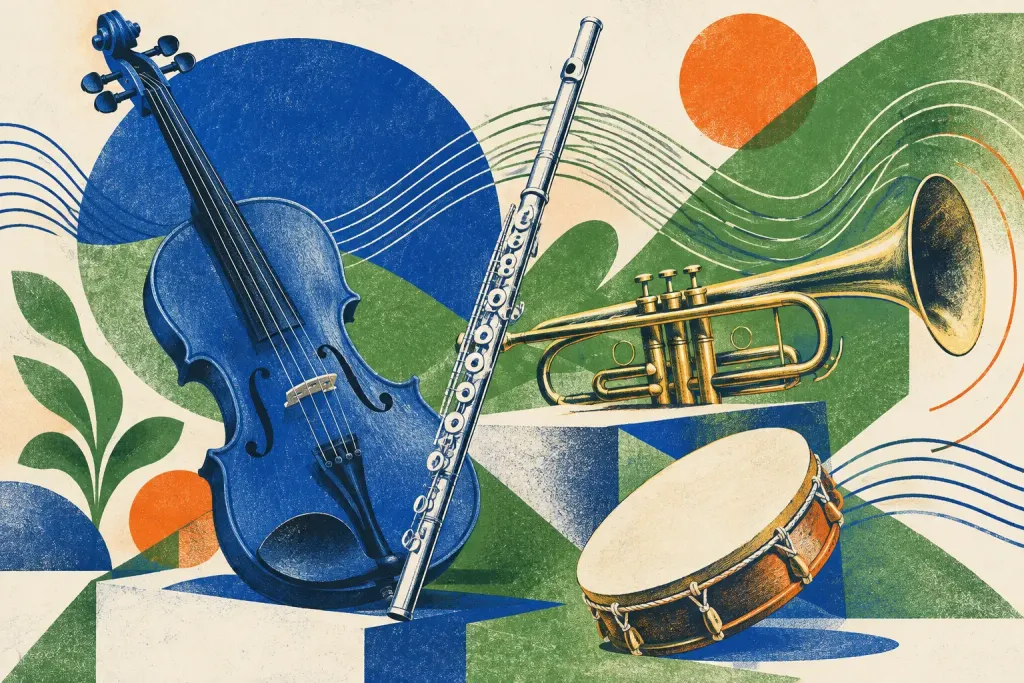
A tune returns, but the sound is no longer bright and direct. It seems softer, thinner or more distant. You recognise the musical shape even though the instrument carrying it has changed.
The Open University’s listening course distinguishes melody from timbre, the quality that helps make a voice or instrument sound distinctive. That distinction gives us two separate things to follow.
Keep the melodic outline in mind
Choose a short phrase and notice whether it rises, falls or circles around a small area. You can sketch the contour with a line. This is a memory aid, not a transcription of exact pitches.
When the phrase returns, compare its outline and rhythm. If both have changed substantially, describe it as a possible relationship rather than insisting it is identical.
Describe the new sound before naming it
Does the sound begin sharply or gradually? Continue smoothly or break into separate attacks? Seem high, low, light or weighty in this particular passage? These observations remain useful when you cannot confidently identify the instrument.
Then use the programme, score or a reliable instrument guide if you want to investigate the source. Avoid turning a first guess into a fact.
Listen to what surrounds the return
A melody played by a different instrument may also have a new accompaniment. Compare the surrounding layers so that you do not attribute every change in feeling to instrumental colour alone.
Finish by writing what remains recognisable and what changes the experience. This two-part note is more revealing than simply saying the orchestra sounds different. If you want a broader starting map, revisit our guide to hearing instrument families, then return to the individual passage with a more focused question.