
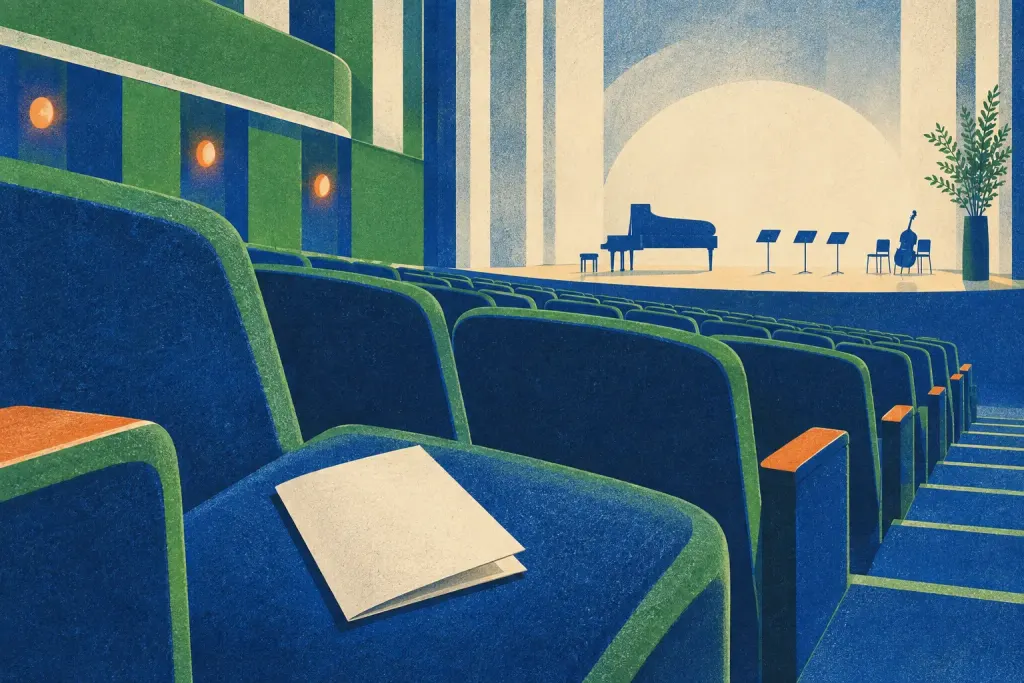
A small group walks onto the stage, and there is no large orchestra to provide a visual map. That can make a first chamber concert feel unusually exposed. It also offers a rewarding invitation: watch and listen for relationships between a few individual parts.
You do not need to follow every player at once. Choose one musical idea that is easy to recognise and let it guide your attention.
Notice an idea changing hands
A short phrase may appear in one part and later be answered, repeated or altered by another. Listen for the resemblance before worrying about its name. Does the second appearance sound like agreement, interruption or a fresh direction?
Those descriptions record your response. They are not claims that the music represents an actual spoken conversation.
Look for support as well as prominence
The most noticeable line is only one part of the experience. When another player sustains a note, repeats a figure or leaves space, consider what that allows the leading part to do.
A quiet role is not an unimportant one. Try following an accompanying part for a short stretch and notice when its pattern changes.
Use the programme sparingly
Read the names of the works and the performers before the music begins. If the programme contains several unfamiliar terms, choose one question to carry into the performance rather than trying to memorise every explanation.
At an interval or after the concert, write down one exchange you remember. Avoid distracting others with a bright screen or continuous note-taking during the performance, and follow the venue’s guidance about devices and photography.
You might leave with a note as simple as “the low instrument repeated the idea more slowly while the upper line kept moving.” That is a real listening observation. Our programme guide helps connect it to the larger shape of the concert without making preparation feel like homework.